

Quick answer
The best time of year for Tadoussac whale watching runs from June through October, with September offering the highest species diversity and the calmest sea conditions. Mid-summer brings minke whales and belugas in large numbers, while early autumn adds fin whales, blue whales, and humpbacks to the mix. Water temperatures and krill abundance peak in late August and September, drawing the largest concentrations of marine mammals to the estuary.
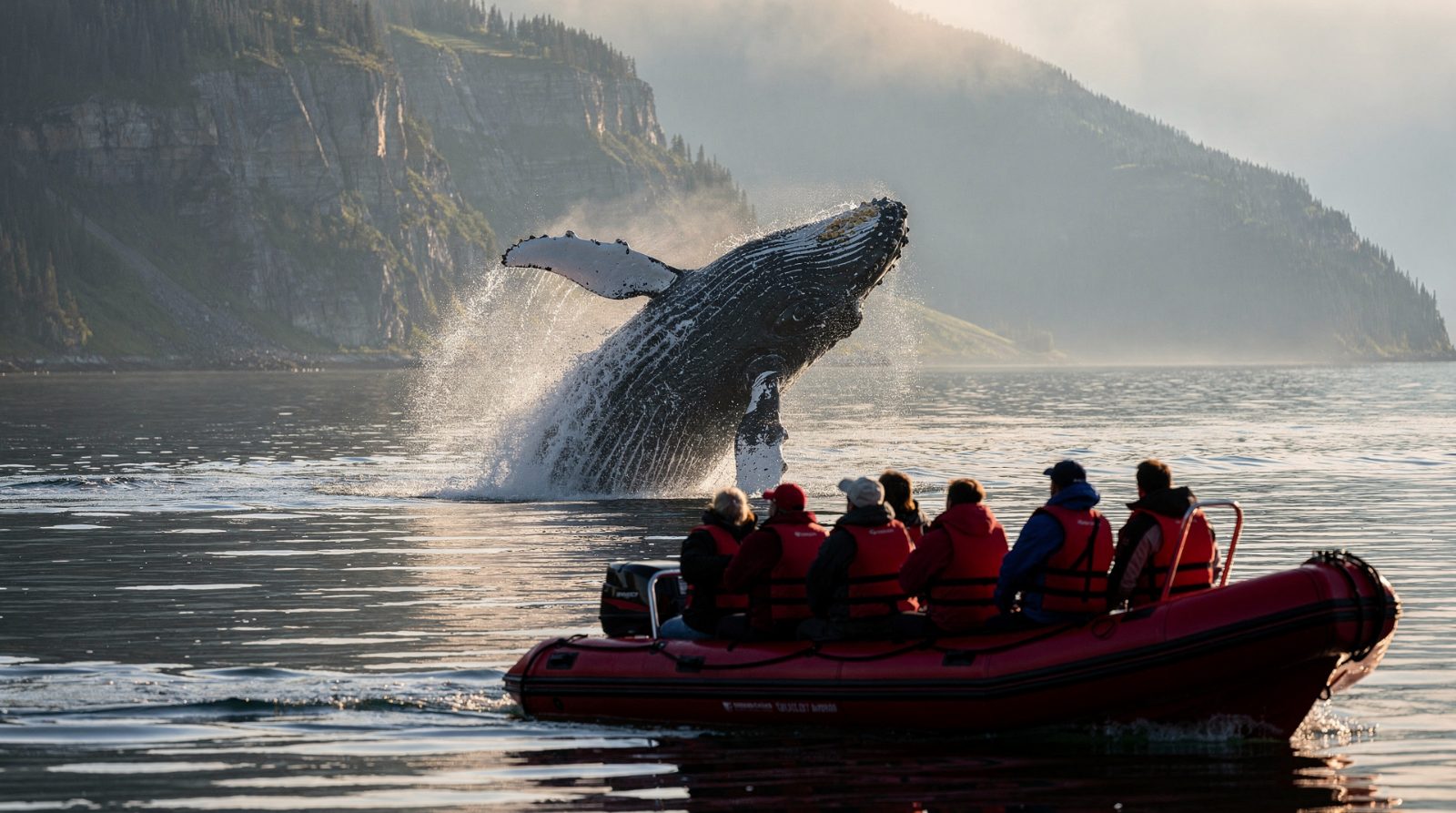
Thirteen species of whales and dolphins inhabit the waters off Tadoussac, but they don't all appear on the same schedule. The nutrient-rich upwelling where the Saguenay meets the Saint Lawrence creates feeding grounds that shift with water temperature, plankton blooms, and seasonal migrations. Minke whales arrive first, typically spotted by late May as waters warm above seven degrees Celsius. Belugas remain year-round in the estuary but concentrate near Tadoussac during summer months when capelin and sand lance spawn in shallow bays. Blue whales—the largest animals ever to exist—pass through from late June onward, following krill swarms that form in response to nutrient upwelling. Fin whales and humpbacks join the procession in August, creating the multi-species feeding aggregations that define peak season. By mid-October, water temperatures drop and most baleen whales depart for southern waters, though belugas and harbor seals persist through winter. Weather patterns matter as much as whale presence. June and early July deliver long daylight hours but choppy seas and frequent fog as spring storms linger. August brings stable conditions but also peak visitor numbers and higher ferry wait times. September balances favorable odds—calm waters, reduced crowds, and the year's greatest species diversity—making it the optimal window for first-time visitors. October offers solitude and dramatic autumn light, though departures decrease as operators wind down seasonal operations. Tour operators in Tadoussac run daily excursions from 08:00 to 17:00 throughout the season, with Zodiac inflatables and larger cruise vessels departing from the village's protected harbor. The Saint Lawrence estuary remains one of the few places on Earth where visitors can observe blue whales from shore, particularly from Pointe de l'Islet and the dunes at the mouth of the Saguenay. Timing a visit to Tadoussac whale watching's best months means accounting for both biological cycles and practical logistics—the marine mammals follow predictable patterns, but so do the weather and the crowds.
“September balances calm waters, reduced crowds, and the year's greatest species diversity—the optimal window for observing whales in Tadoussac.”
Tadoussac Whale Watching Best Time of Year: Operational Hours
The facilities and ticket offices in Tadoussac operate daily to accommodate visitors planning excursions on the Saint Lawrence River. Travelers are encouraged to utilize the best arrival window of 08:00–17:00 to avoid peak ferry queues and ensure alignment with tour departure operations.
| Monday | 08:00–17:00 | |
|---|---|---|
| Tuesday | 08:00–17:00 | |
| Wednesday | 08:00–17:00 | |
| Thursday | 08:00–17:00 | |
| Friday | 08:00–17:00 | |
| Saturday | 08:00–17:00 | |
| Sunday | 08:00–17:00 |
Navigating to Tadoussac Whale Watching Best Time of Year: Arrival Logistics
Tadoussac is located at the confluence of the Saguenay and Saint Lawrence rivers, accessible primarily via Route 138. The most efficient approach involves the free ferry service connecting Baie-Sainte-Catherine to Tadoussac.
Route 138 North toward Tadoussac
Ferry from Baie-Sainte-Catherine to Tadoussac
Intercar coach service to Tadoussac
Tadoussac Whale Watching Best Time of Year: Admission and Fee Structure
Access to the village of Tadoussac and shoreline observation areas is free of charge. Water-based whale watching tours require a separate ticket purchase from authorized operators.
While shore access is free, visitors must purchase a separate tour ticket to participate in boat-based whale watching, with prices determined by the specific excursion operator.
Tadoussac Whale Watching Best Time of Year: Pre-Visit Preparation
Prepare for variable marine conditions and secure your spot on the water well ahead of your visit.
-
Book your boat tour in advance — Tours fill quickly during peak whale migration months and operators have limited daily departures.
-
Pack layered clothing and a waterproof jacket — Temperatures on the Saint Lawrence drop significantly once you leave shore, even in summer.
-
Bring binoculars and a camera with zoom — Whales surface at varying distances and close encounters are never guaranteed.
-
Confirm your departure time the day before — Weather conditions can shift tour schedules or require cancellations for safety.
-
Arrive 30 minutes before your tour departs — Check-in procedures and safety briefings precede all boat departures.
-
Wear closed-toe shoes with non-slip soles — Boat decks become wet and slippery from spray during the trip.
Check availability
Frequently asked questions about tadoussac whale watching best time of year
Everything you need to know about tadoussac whale watching best time of year