

Quick answer
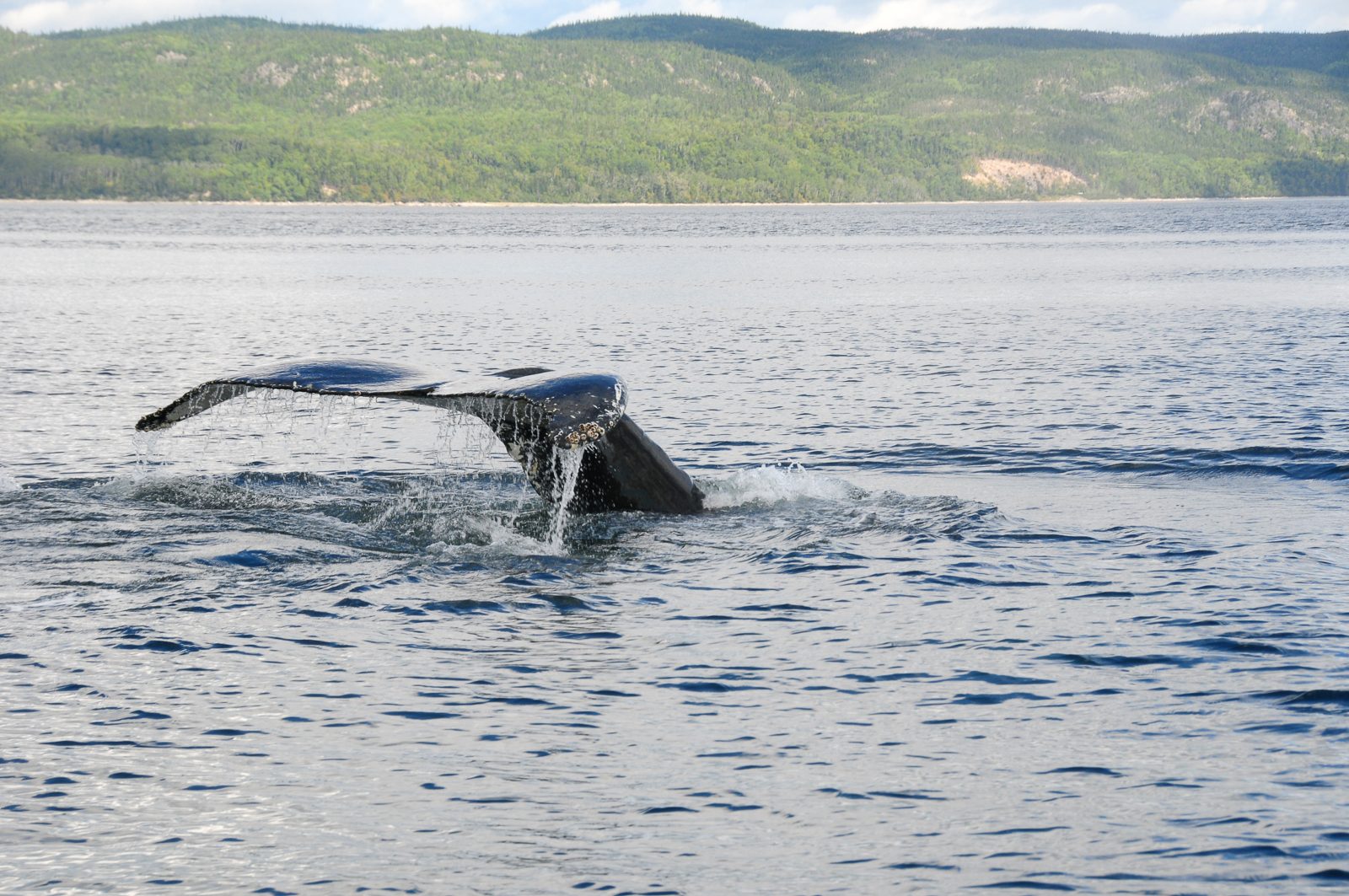
Tadoussac whale watching types of whales include five species seen regularly from May through October: minke whales (smallest baleen species, present all season), fin whales (second-largest animal on Earth, peak July–September), blue whales (the largest, best odds August–September), belugas (year-round residents of the Saguenay Fjord), and humpback whales (increasingly common since 2016, identifiable by long pectoral fins and acrobatic breaches). Eight additional species — including harbour porpoises, grey seals, and occasional orcas — appear less predictably.
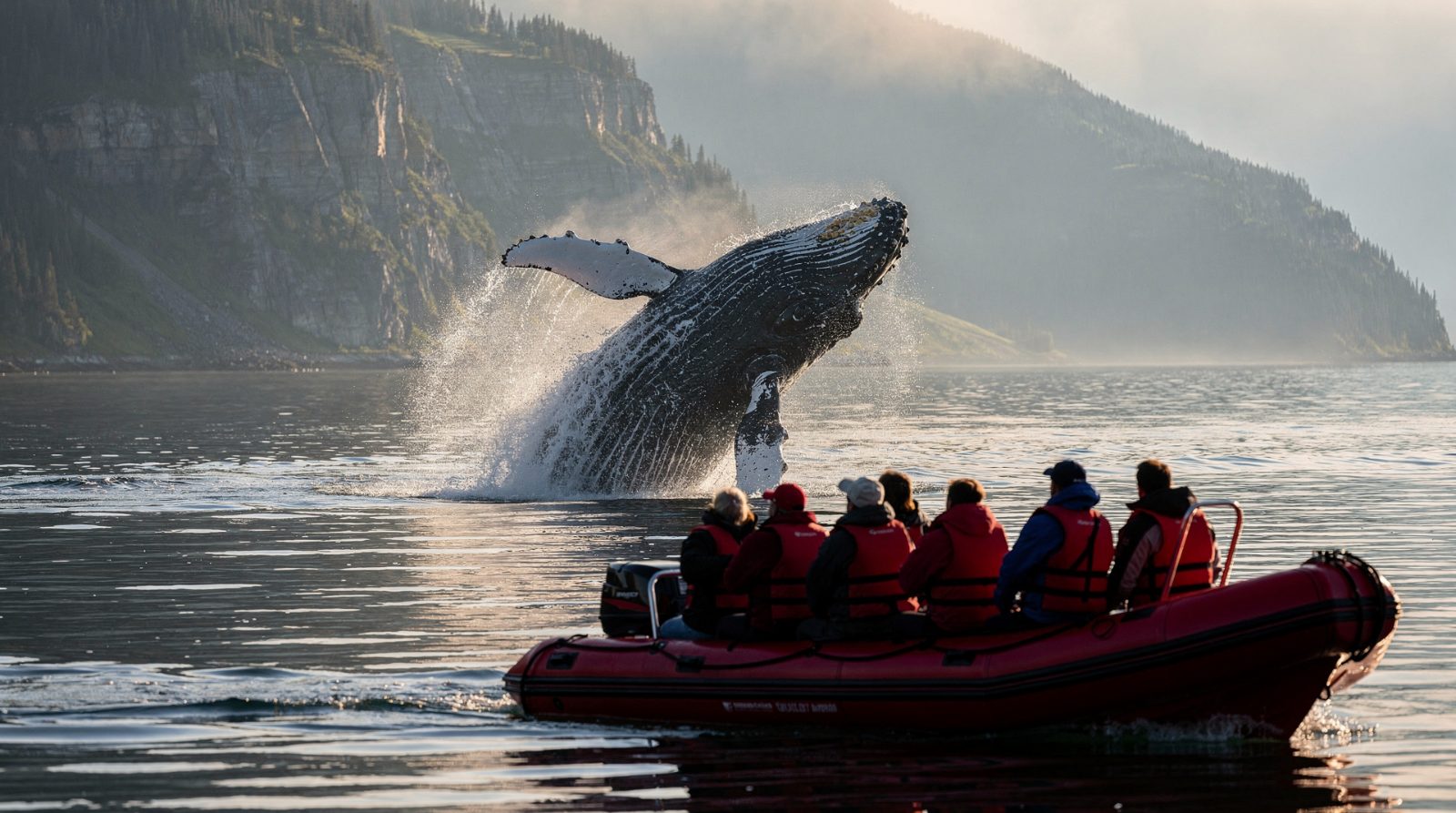
The Saint Lawrence estuary sustains the highest concentration of large whales in eastern Canada because upwelling currents drive Arctic krill and capelin into shallow feeding zones where the fjord meets the river. Blue whales — animals that can exceed thirty meters and weigh 180 tonnes — arrive in late summer to exploit this prey density. Fin whales, nearly as large, patrol the deeper channels from July onward. Minke whales, the most reliably sighted baleen species in Tadoussac whale watching, hunt closer to shore and appear as early as May, often approaching boats within meters. Beluga whales occupy the Saguenay Fjord year-round, a genetically distinct population that numbers around 900 individuals and remains listed as endangered. Their white coloration makes them unmistakable against the dark water. Humpback whales, absent from these waters for decades, have returned in growing numbers since 2016; their catalogue of fluke patterns now includes more than 120 individuals. Observers recognize them by the knobbly protrusions on their heads and the habit of raising their tails before deep dives. Sighting probability for the types of whales in Tadoussac depends on the calendar. Minke and beluga encounters occur on nearly every cruise from June through September. Fin and blue whale odds improve significantly in August and early September when krill concentrations peak near the marine park's western boundary. Humpback sightings, once considered exceptional, now happen on roughly one in three excursions during high season. Less common species — harbour porpoises, Atlantic white-sided dolphins, and the occasional orca pod — account for fewer than ten percent of reported observations. Cruise operators in Tadoussac use hydrophones to detect whale vocalizations and coordinate sighting reports in real time, increasing the likelihood of close encounters. The Saguenay–St. Lawrence Marine Park enforces strict approach distances: 400 meters for endangered belugas and blue whales, 200 meters for other large cetaceans. These regulations mean that animals control the proximity of interactions, and patient observation often yields the most memorable moments.
“The Saint Lawrence estuary sustains the highest concentration of large whales in eastern Canada because upwelling currents drive Arctic krill and capelin into shallow feeding zones.”
Seasonal and Daily Timing for Tadoussac Whale Watching Types of Whales
The prime season for observing diverse whale species in the Saint Lawrence River spans from May to October, with peak activity during the summer months. Arriving between 09:00 and 16:00 ensures optimal daylight for boat departures and shore-based observations.
May to June
Moderate crowdsCool, 5°C to 15°C
Migrating whales begin arriving in the estuary as ice clears. Early season allows for sightings of belugas and minke whales.
July to August
High crowdsWarm, 15°C to 25°C
This period offers the highest frequency of sightings, including blue, fin, and humpback whales. Marine activity is at its seasonal peak.
September to October
Low to moderate crowdsCool, 5°C to 15°C
Whales remain active and feed heavily before migration. Waters remain navigable and provide stable conditions for observation.
Weekday mornings
Low crowds—
Arriving within the best arrival window of 09:00 to 16:00 minimizes wait times. Early departures often benefit from calmer water conditions.
Verdict: The best opportunity for observation is from Tuesday to Thursday, arriving at 09:00 during the months of September or October.
Key Observation Zones for Tadoussac Whale Watching Types of Whales
The Saguenay–St. Lawrence Marine Park features distinct topographical zones that influence where various whale species congregate. Understanding these underwater landscapes helps in identifying the preferred habitats of resident and migratory marine mammals.
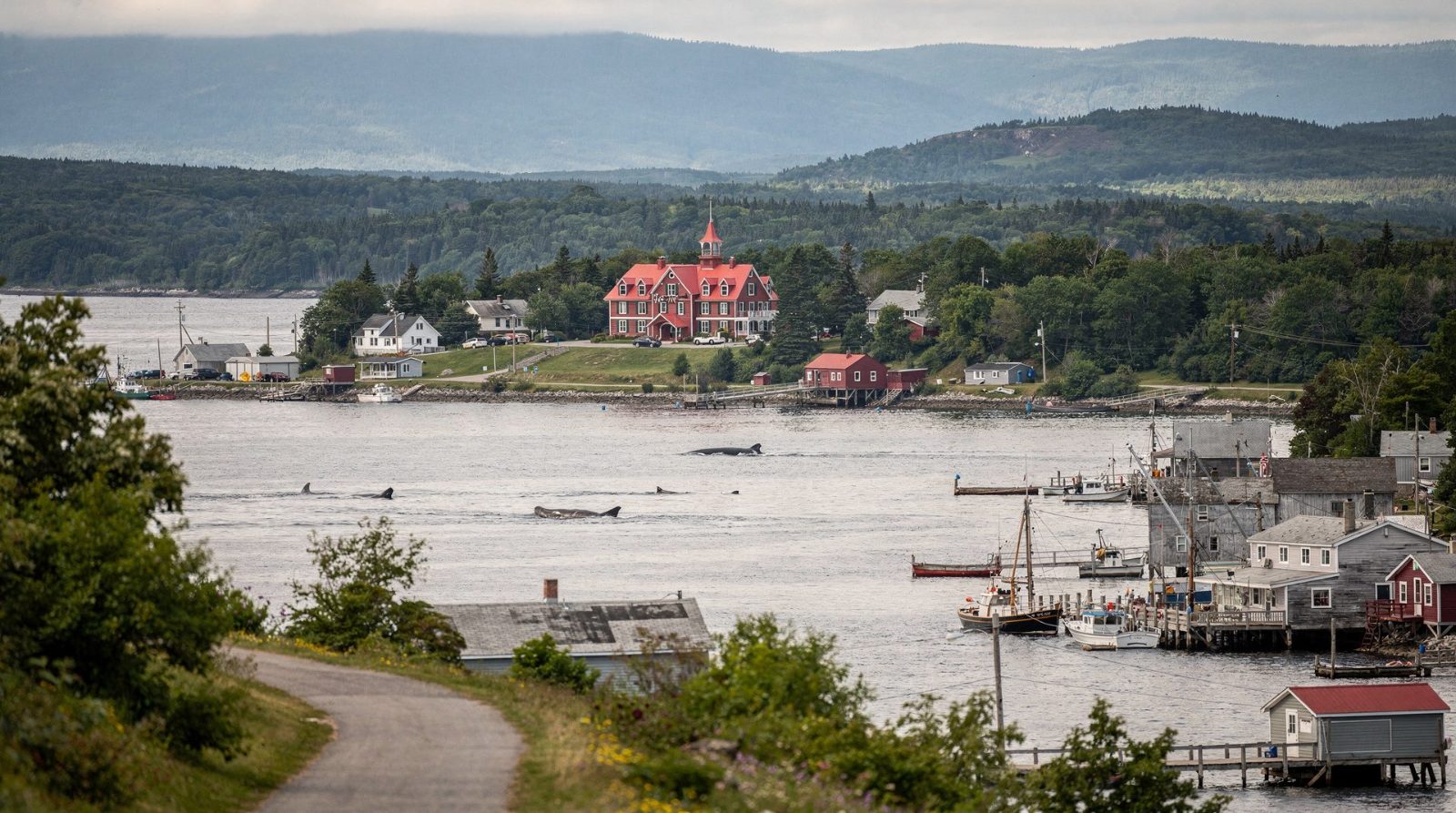
Saguenay Fjord Entrance
This area features a dramatic depth change where cold, oxygen-rich waters from the fjord meet the St. Lawrence, attracting smaller rorquals. The abrupt vertical drop-off creates an ideal feeding ground for minke whales.
Watch for dorsal fins near the transition line where currents collide.
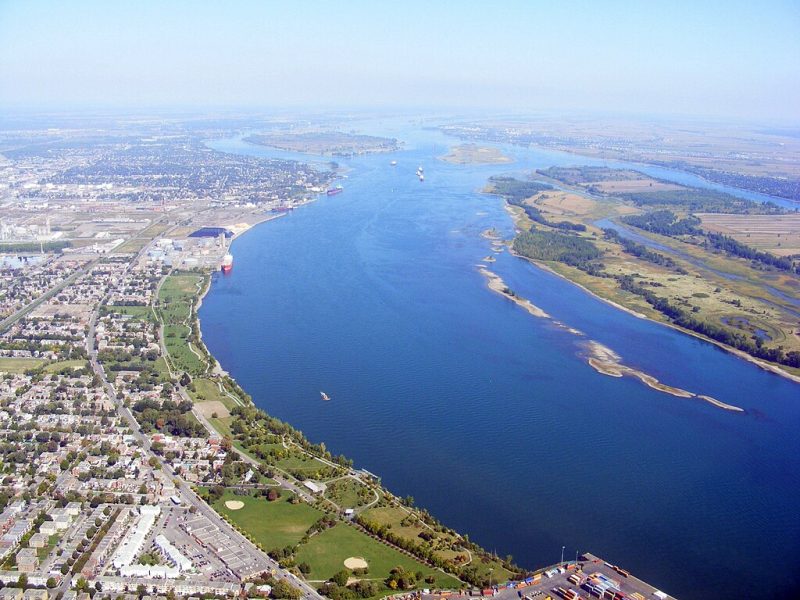
St. Lawrence Channel
The deep central channel serves as a primary transit corridor for larger species like fin and blue whales moving through the park. These giants utilize the deep trench to navigate and forage in nutrient-dense upwellings.
Observe the horizon for large spouts signaling deep-diving species surfacing.
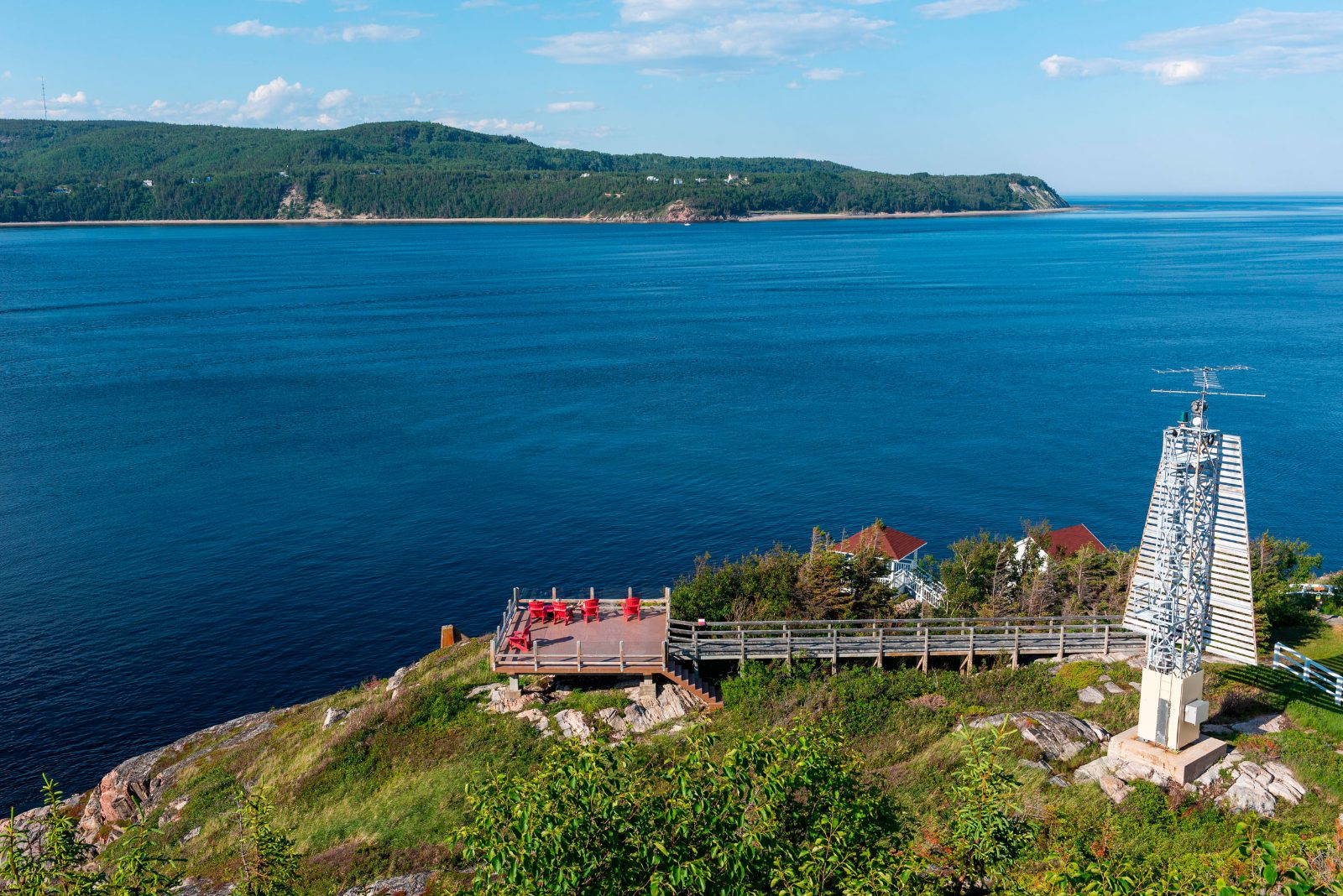
Pointe-Noire Cliffs
Located on the north shore, these rocky cliffs provide a high vantage point for spotting beluga pods as they surface in the shallower, calmer waters of the bay. It is a frequent site for observing social behaviors in the resident beluga population.
Bring binoculars to track small white shapes moving against the blue.
The Mer de Glace
This sector is characterized by intense underwater currents and turbulence caused by the complex bathymetry of the riverbed. Humpback whales often congregate here to exploit the concentrated krill and fish trapped by the shifting tides.
Check for pectoral fin slapping in areas of high current.
Visitor Center Hours for Tadoussac Whale Watching Types of Whales
The Marine Park facilities operate daily to assist visitors with information regarding the Saint Lawrence River environment.
| Monday | 09:00–17:00 | |
|---|---|---|
| Tuesday | 09:00–17:00 | |
| Wednesday | 09:00–17:00 | |
| Thursday | 09:00–17:00 | |
| Friday | 09:00–17:00 | |
| Saturday | 09:00–17:00 | |
| Sunday | 09:00–17:00 |
Admission Fees for Tadoussac Whale Watching Types of Whales
Access to the Saguenay-St. Lawrence Marine Park is provided at no cost for visitors. Any fees associated with whale watching are set exclusively by private cruise operators for their vessel services.
While the Marine Park itself is free to enter, visitors pay commercial rates determined by individual tour operators for whale watching boat excursions.
Check availability
Frequently asked questions about tadoussac whale watching types of whales
Everything you need to know about tadoussac whale watching types of whales